The Friedrich-Loeffler-Institut (FLI) has launched a pivotal field study in Brandenburg, Germany, to test innovative vaccine baits aimed at preventing African Swine Fever (ASF) in wild boar. The pivotal trial began on November 17, 2025 and marks a crucial step in developing effective strategies to control ASF.
Testing Vaccine Baits in Various Habitats
The study is being carried out in diverse locations with varying vegetation types across Brandenburg, including trapping locations, feeding areas, and reference sites untouched by any interventions. The aim of the study is to assess how wild boar respond to different bait types, including those based on corn, plant fats, and eggs, and to determine their preferences. The research will evaluate whether a standardized bait system can be implemented across Europe, or if region-specific solutions are needed due to variations in wild boar populations and environmental conditions.
Monitoring and Validation
To assess bait consumption and wild boar activity, the team employs camera traps and direct on-site monitoring. Non-invasive sampling methods, such as placing bait-soaked chew ropes and collecting feces samples, will help validating bait acceptance by wild boar while minimizing disruption to their natural behavior. Baits are placed under wooden plates to prevent non-target species, such as deer, from consuming them. Importantly, the vaccine baits are designed to be safe for non-target species in case of accidental ingestion.
In the first phase, blue sugar solutions are being used to track bait consumption through feces analysis. The researchers plan to distribute 30 bait samples per observation block at different locations. Observation periods for each bait type are set for 14 days, with baits rotating between locations. Once the baits are accepted by the wild boar, future steps will involve incorporating a vaccine into the baits.
Collaboration and Practical Support
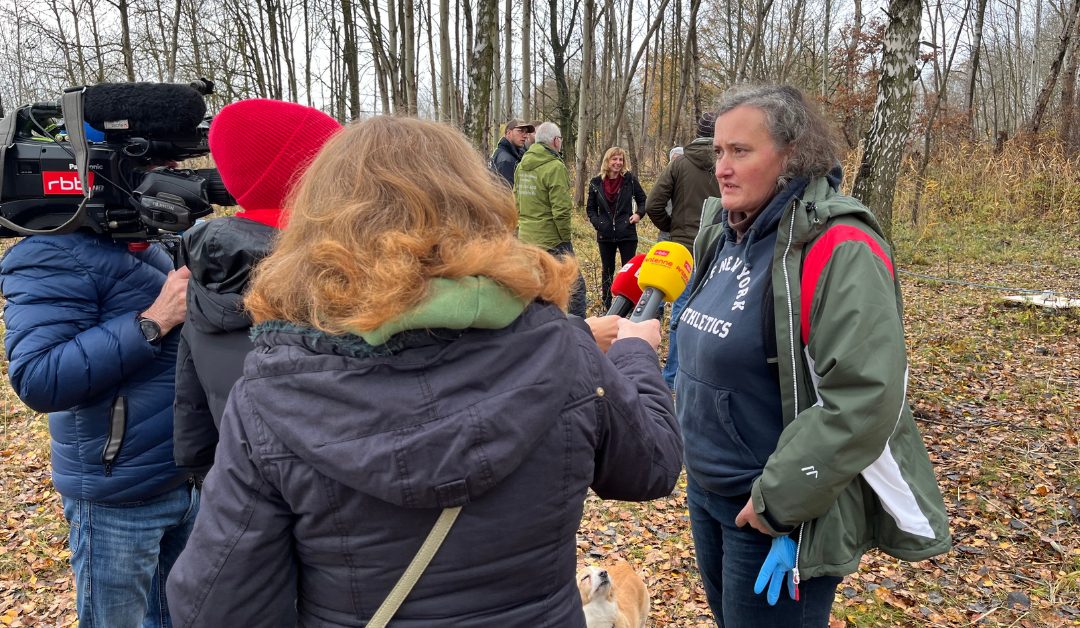
Local farmers have welcomed the trials, hoping they will help reduce the impact of ASF outbreaks in the region. The project also involves collaboration with WildVet for the practical implementation and monitoring of bait acceptance. The launch event, attended by the media, provided an opportunity for direct engagement with the field team and Sandra Blome shared insights into the innovative approach of using oral vaccine baits to combat ASF. This collaborative effort and the exchange of expertise are essential to the success of the study, which will provide valuable information about wild boar behavior and support the development of effective ASF vaccination strategies in Europe.